 Shop
Shop
-1.png)

eStoreRx™
Online Supplement Dispensary
eStoreRx™ is an easy direct-to-patient ordering & fulfilment program for lifelong wellness.
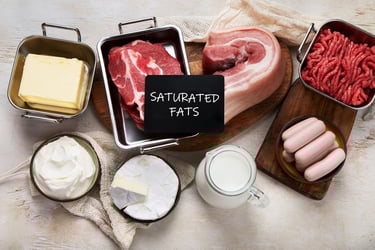
Everything old is new again, or perhaps it never goes away in the first place. Concern about dietary saturated fat as a cause of cardiovascular disease (CVD) has been a mainstay of public health thinking since as far back as the 1950s, but it has been the subject of controversy for just as long, with researchers questioning the existence of a link between saturated fat intake and CVD. Despite this controversy, recommendations to limit dietary saturated fat remain in place. As we covered recently, the 2025-2030 Dietary Guidelines for Americans suggest a 10% cap on total calories from saturated fat, while at the same time recommending full-fat dairy foods rather than reduced-fat varieties, and specifically mentioning butter and beef tallow as good options for cooking.
The debate continues, however, with a recent review in Annals of Internal Medicine concluding that there was only “low to moderate certainty” evidence that reducing saturated fat intake may reduce all-cause mortality, cardiovascular mortality, nonfatal heart attack, or fatal and nonfatal stroke. It was specifically noted that for people with low baseline cardiovascular risk, absolute reductions were below the thresholds of importance (5 and 10 per 1000 persons followed over 5 years for fatal and nonfatal outcomes, respectively). And even for those at high risk, replacing saturated fat with polyunsaturated fat showed only low- to moderate-certainty evidence with regard to reductions in mortality and major cardiovascular events. These findings were based on 17 randomized trials encompassing over 66,000 participants.
An editorial accompanying the review noted that the purported connection between saturated fat intake and CVD is that saturated fatty acids (SFAs) “cause heart disease by increasing serum cholesterol level.” It notes, however, that this hypothesis is “based on weak evidence of association and not causation.” Decades of research have cast doubt on elevated blood cholesterol level as a causal factor in CVD. Many thousands of people have been found to have “severely elevated LDL-C” (≤ 190 mg/dL), yet an absence of calcified and noncalcified plaque on coronary computed tomographic angiography, putting them at low risk for cardiovascular events. Moreover, even if elevated cholesterol does increase risk in some people, it appears to be a much weaker risk factor compared to type 2 diabetes, metabolic syndrome, and insulin resistance, which were shown to confer 10 and 6 times the relative risk, respectively, for coronary heart disease in women. (In contrast, the hazard ratios for total cholesterol and LDL-cholesterol were 1.39 and 1.38, respectively.)
In the Annals review, the 95% confidence intervals for all risk ratios cross 1.0, showing that the “low to moderate” certainty evidence lacks statistical significance for all outcomes:
|
Outcome |
Risk Ratio |
95% Confidence Interval |
|
All-cause mortality |
0.96 |
0.88–1.06 |
|
Cardiovascular mortality |
0.93 |
0.77–1.11 |
|
Nonfatal myocardial infarction |
0.86 |
0.70–1.06 |
|
Fatal and nonfatal stroke |
0.83 |
0.58–1.19 |
The review concluded that for people at low baseline cardiovascular risk, “reducing or modifying saturated fat intake has little or no benefit over a period of 5 years.” And even for those at higher risk, evidence lacked statistical significance with regard to a beneficial impact on mortality and major cardiovascular events from replacing saturated fat with polyunsaturated fat.
An earlier meta-analysis that reviewed 21 studies encompassing over 347,000 subjects determined that saturated fat intake was not associated with an increased risk of CVD, stroke, or coronary heart disease. And a more recent review—published in the Journal of the American College of Cardiology—noted that recommendations to limit saturated fat intake have “persisted despite mounting evidence to the contrary.” The authors explain that “saturated fat” is a heterogeneous category that includes numerous individual fatty acids which may have unique effects, so painting them all with a broad brush is misleading. Moreover, various whole foods that are rich in SFAs—such as whole-fat dairy, unprocessed meat, and dark chocolate—deliver potential benefits (e.g., antioxidants, bioavailable vitamins and minerals), and the presence of SFAs in these foods does not appear to detract from this.
It may or may not be beneficial to replace saturated fat with mono- or polyunsaturated fats, but it seems particularly detrimental to replace it with carbohydrate—especially refined carbs. And this isn’t new information. A paper published sixteen years ago noted that replacing SFAs with carbohydrates, “particularly refined carbohydrates and added sugars, increases levels of triglyceride and small LDL particles and reduces high-density lipoprotein cholesterol, effects that are of particular concern in the context of the increased prevalence of obesity and insulin resistance.” In a paper published the same year in the American Journal of Clinical Nutrition, the authors recommended that “dietary efforts to improve the increasing burden of CVD risk associated with atherogenic dyslipidemia should primarily emphasize the limitation of refined carbohydrate intakes and a reduction in excess adiposity.”
It’s interesting to note that a diet high in saturated fat (~100 g SFA/day as part of a very-low-carb diet providing 74% of total calories as fat) was shown to reverse metabolic syndrome in over half the participants. This study was specifically designed to prevent clinically meaningful weight loss, so replacing carbohydrate with saturated fat can reduce cardiovascular risk even in the absence of weight loss. Findings like this certainly raise questions about the purported detrimental effect of SFA on risk.
Risk for cardiovascular disease cannot be attributed to a single factor. Traditional risk factors—in particular, elevated total cholesterol and LDL-C—are often unreliable indicators of actual disease. If the main reason for limiting saturated fat intake is to reduce serum cholesterol levels, but serum cholesterol levels are poor predictors of risk, then it’s only logical that reducing SFA intake has shown little to no benefit for reducing risk for cardiovascular events or mortality. Future public health efforts may yield better results by helping people address issues with stronger associations to CVD, such as type 2 diabetes and insulin resistance.

Submit your comment